What To Do When Garage Door Fails Suddenly
When a garage door fails suddenly immediate steps can prevent injury and further damage. National Garage Door Services provides clear emergency guidance so homeowners know how to respond safely. Call 469-555-8888 if you need urgent professional assistance or guidance on safe temporary fixes. Our technicians are ready to evaluate the problem and restore secure operation quickly. Trust our fast response to protect your home and family.
Few household failures are as disruptive - or potentially dangerous - as a garage door that stops working without warning. Knowing what to do when a garage door fails suddenly can reduce the risk of injury, prevent collateral damage to vehicles and possessions, and protect your home's security. This guide explains immediate safety steps, basic diagnostics you can perform, safe temporary measures, and when to call a professional. National Garage Door Services compiles practical, experience-based advice so homeowners can act confidently in the first minutes after a failure.
Immediate safety steps to take the moment your garage door stops working
When a garage door fails suddenly, your first priorities are people and property. If anyone is near or under the door, move them to a safe distance immediately. A failed door can drop unpredictably if a torsion spring or cable breaks, so treat every failure as a potential hazard. Keep children and pets away from the garage while you assess the situation, and avoid standing in the door's path.
Next, cut power to the opener to eliminate any electrical risks. Locate the opener's power switch or unplug the unit from the ceiling outlet. This prevents the opener from attempting unintended movement and removes the risk of electrical shock during inspection. If you smell burning or see smoke, evacuate the area and call emergency services before returning to inspect the door.
Finally, secure the perimeter and lock any interior entry doors between the garage and your home. A failed garage door can leave the garage vulnerable to weather and opportunistic entry, so closing and locking internal doors reduces exposure while you decide on next steps. If the door is stuck partially open, place a barrier or wheel chock under the door to deter accidental movement until a professional can handle the situation.
Quick diagnostic checks you can perform safely
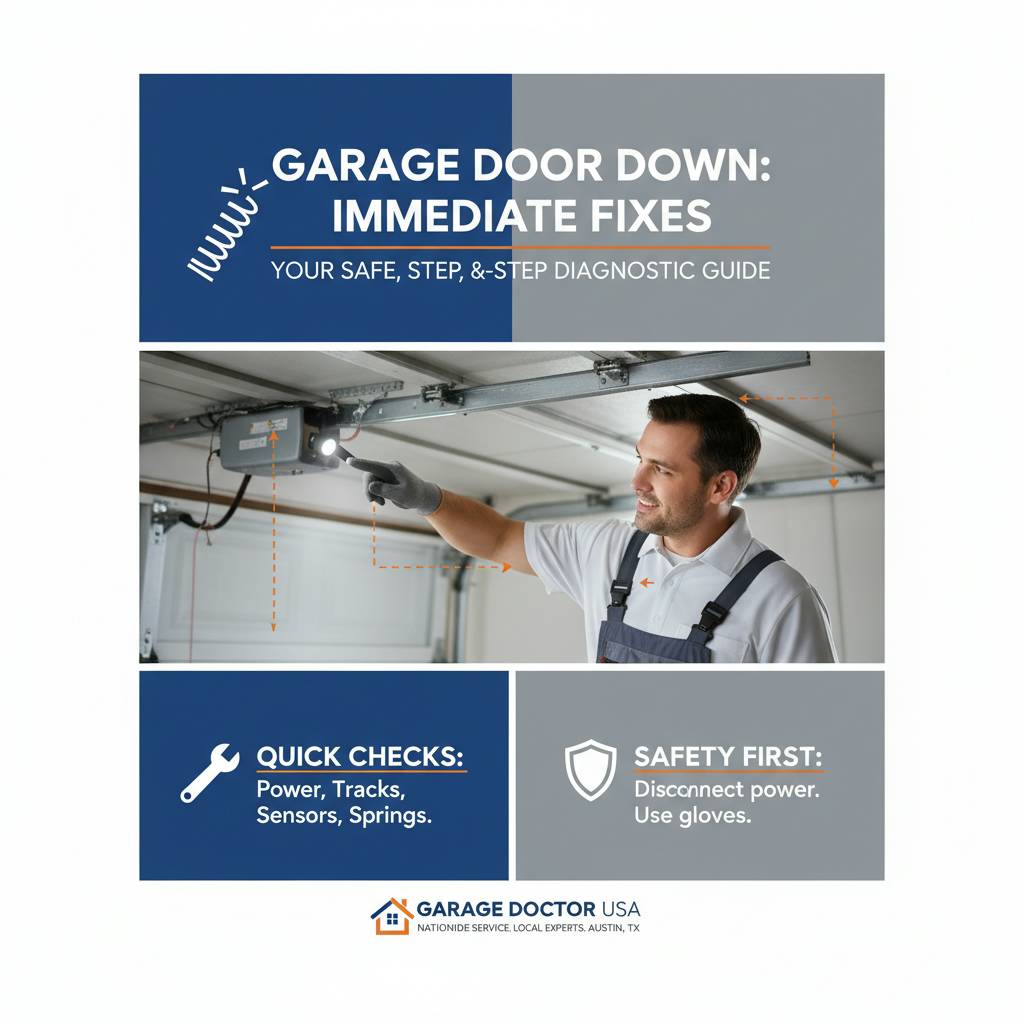 After addressing immediate safety concerns, a few simple checks will help you understand what's wrong and whether the issue is something you can handle or requires professional attention. Start by observing how the door behaves when you try to operate it manually with the opener disconnected. Use the emergency release cord - usually a red cord hanging from the opener rail - to disengage the opener and test the door's balance and movement by hand. If the door feels extremely heavy or slams when moved, the springs are likely compromised and you should not attempt repairs yourself.
Common failure indicators and what they suggest
If the opener motor runs but the door doesn't move, the problem may be with the drive system (belt, chain, or screw) or the trolley that connects the opener to the door. If the opener makes a grinding or humming noise and the door remains stuck, that suggests internal gear damage or a severely misaligned track. If the door opens a few inches and then reverses, check sensor alignment - modern doors reverse as a safety measure when the photo-eye sensors are obstructed or misaligned.
Inspect visible hardware carefully without touching springs, cables, or pulleys. Look for obvious signs of wear such as frayed cables, a visibly broken torsion spring, bent track sections, or missing fasteners. Photograph any damage for reference. If you see a broken spring, snapped cable, or a dislodged roller, stop there: these components store significant energy and can cause serious injury if handled improperly.
Safe temporary fixes you can attempt (and when to stop)
There are practical, low-risk measures homeowners can take to stabilize the situation until a trained technician arrives. If the opener is the problem and the door can be moved manually, use the emergency release to operate the door by hand and lower it gently to a closed position. Once closed, block the door with a sturdy object inside the garage - such as a wooden beam or heavy furniture - to prevent it being pushed up from the outside. Do not wedge objects under a partially open door that could cause a sudden shift.
- Disconnect the opener using the emergency release and test manual movement only if the door moves smoothly and without heavy resistance.
- If sensors are dirty or misaligned, clean the lenses gently and realign them by adjusting their mounts until their indicator lights show proper connection.
- Secure the door closed from the inside with a lock bar or slide bolt if you need to leave the property overnight and professional help is delayed.
Do not attempt to adjust or replace springs, cables, or hardware attached to the spring system. These parts are under extreme tension and are the cause of the majority of severe garage-door injuries. If any fix requires loosening springs, using improvised tools, or climbing onto a ladder to manipulate high-tension elements, call a professional. Your safety is worth the wait.
Diagnosing specific component failures
Understanding common failure modes helps you communicate effectively with a technician and decide what immediate steps are reasonable. Below are the most frequent issues and how they usually present.
Opener and electrical problems
If the wall control or remote does nothing, check the opener's power source and the remote battery first. A tripped breaker or unplugged opener is an easy fix. If the opener powers but will not cycle, internal gears, motor winding, or circuit board components could be failing. Smells of burning or visible smoke indicate electrical failure and need immediate professional attention.
Spring and balance failures
Torsion and extension springs do the heavy lifting for your garage door. When springs break they often make a loud bang and the door will either drop or become very hard to lift. Balance tests - lifting the door manually from the center when the opener is disconnected - help identify spring problems. If the door is asymmetrically heavy or drops quickly, do not attempt to lift or repair it yourself.
Tracks, rollers, and alignment issues
Bent tracks, seized rollers, or loose fasteners create friction and binding that can stop a door mid-cycle. These issues may cause grinding sounds or jerky motion. Minor misalignment sometimes can be corrected by tightening mounting bolts and repositioning brackets, but significant bends or damage should be evaluated and repaired by a pro to prevent recurring failures.
Sensors, remotes, and control system errors
Modern doors use photo-eye sensors that stop and reverse the door if their line of sight is blocked. Dirt, spider webs, or small objects can trigger reversals. Ensure sensors are clean and aligned; their indicator lights should be steady and showing a proper connection. Control boards occasionally lock up and need a reset, which is usually done by cycling power to the unit after checking for obvious wiring issues.
When to call a professional and what to expect
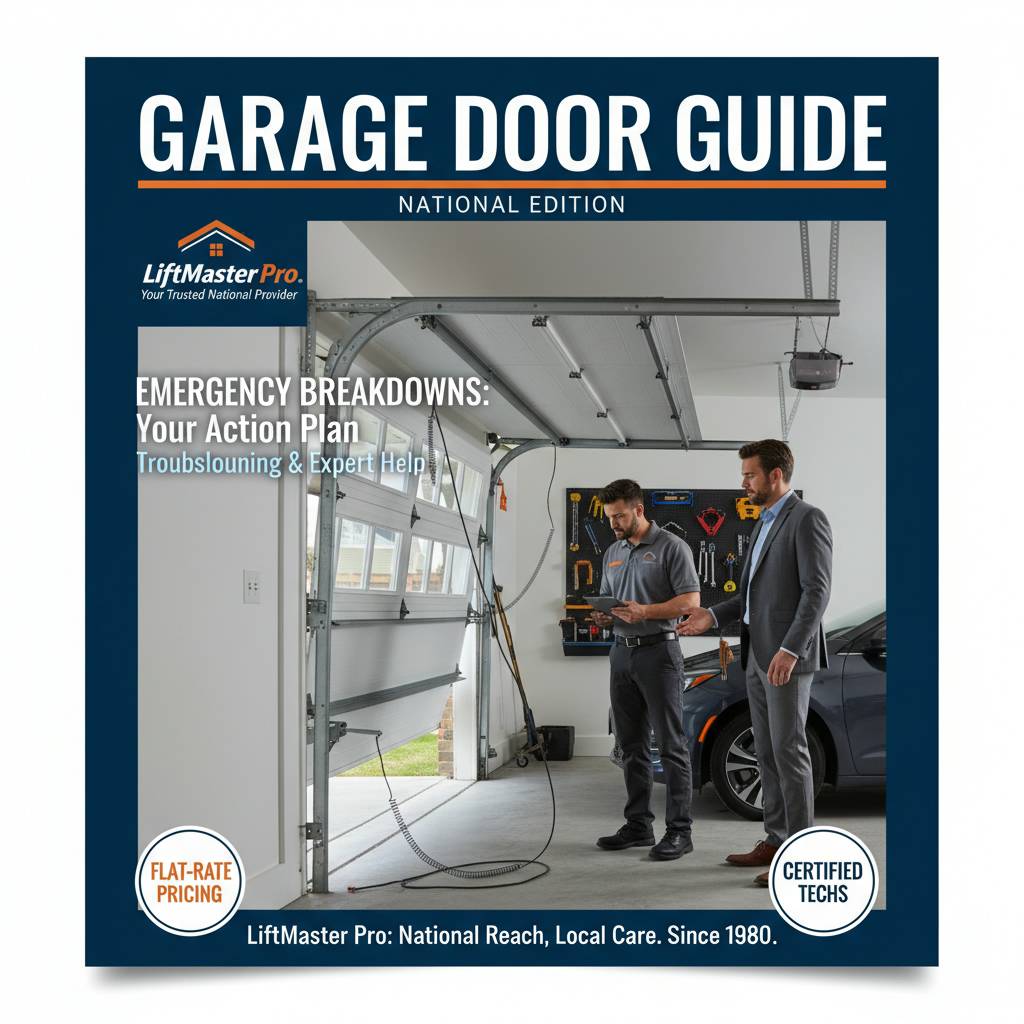 Call for professional help immediately if you encounter any of the following: broken springs or cables, severe structural damage, symptoms of electrical failure (burning smells, smoke, or repeated breaker trips), a door that is off-track, or any situation where the door cannot be closed securely. These conditions pose safety risks that require trained technicians, specialized tools, and replacement parts.
When you contact a reputable service like National Garage Door Services, expect a technician to ask specific questions about symptoms and what you observed. Be ready to describe sounds, whether the opener runs, any visible damage, and whether the door moved under manual force. This information helps prioritize response and ensures the technician brings the correct tools and replacement parts. NGDS may be used on arrival forms or scheduling notes if you have a personalized service plan with the company.
| Problem | Typical professional actions |
|---|---|
| Broken torsion or extension spring | Remove damaged spring and install a matched replacement, rebalance the door, test safety reversal systems |
| Failed opener motor or gears | Diagnose electrical components, replace worn gears or motor, test limits and force settings |
| Off-track door or severe panel damage | Realign tracks, replace damaged rollers or panels, ensure smooth operation and secure mounting |
Professional service includes not only repair but testing of safety devices and a walkthrough of what caused the failure and how to avoid a repeat occurrence. A trustworthy technician will also explain cost estimates and provide an honest recommendation: immediate repair, safe temporary measures, or a full replacement depending on age and condition of the door.
Preventive maintenance to reduce the chance of sudden failure
Most sudden failures can be delayed or avoided with a modest maintenance routine. Inspecting your door's hardware every six months, lubricating rollers and bearings annually, and testing the balance and safety reversal system regularly will lengthen component life and reduce surprises. Replace worn cables, frayed belts, or rollers at the first sign of significant wear rather than waiting for complete failure.
- Test balance: disconnect the opener and lift the door halfway; it should stay in place. If it doesn't, springs may need adjustment.
- Lubricate moving metal parts with a manufacturer-recommended lubricant and avoid greasing plastic components or tracks excessively.
- Inspect safety sensors monthly for dirt and alignment; keep the lenses clean and check wiring for wear.
Keeping a service record helps technicians spot trends and recommend preemptive replacement of aging components before they fail catastrophically. If your door is over 1215 years old or has had multiple repairs, consider budgeting for a complete replacement: new doors and openers offer improved safety features, quieter operation, and long-term reliability.
Frequently asked questions and short scenarios
Q: My door stopped halfway and won't move - is it safe to pull the emergency release and close it manually? A: If the door moves smoothly by hand and doesn't feel heavy, using the emergency release to operate manually is acceptable for a temporary solution. If the door is hard to move, uneven, or falls rapidly, do not attempt manual operation-call a professional.
Q: I heard a loud snap - could that be a broken spring? A: Yes. A snapping sound often indicates a broken torsion or extension spring. Do not go near the door or attempt repairs; broken springs are dangerous and require specialized tools and training.
Scenario: The opener runs but the door doesn't move. The technician will check the trolley, belt or chain drive, and the opener's internal gears. Sometimes a slipped trolley or broken sprocket is all that's needed to restore function; other times the opener is beyond economical repair and replacement is recommended.
If you need urgent help right now, call National Garage Door Services at 469-555-8888 for immediate guidance and rapid dispatch in emergencies. Our technicians are trained to handle dangerous failures safely and can advise on temporary measures while help is on the way.
For non-urgent concerns, schedule a maintenance inspection to reduce the likelihood of sudden failures in the future. Regular care and timely replacement of worn parts will extend the life of your garage door and keep it operating reliably for years. If you've experienced a recent failure, documenting what happened and sharing those details with your service provider speeds diagnosis and repair.
When a garage door fails suddenly, quick action can protect people, vehicles, and property. Follow these priorities: secure the area, cut power, perform safe visual checks, and avoid any high-tension repairs yourself. Trust trained technicians for spring, cable, and major structural work. National Garage Door Services is ready to help - call us at 469-555-8888 for immediate assistance, expert repair, or to schedule preventive maintenance. We'll restore safe, reliable operation and give you peace of mind.